
How to Get More Range on an Electric Bike: Maximize Miles Per Charge
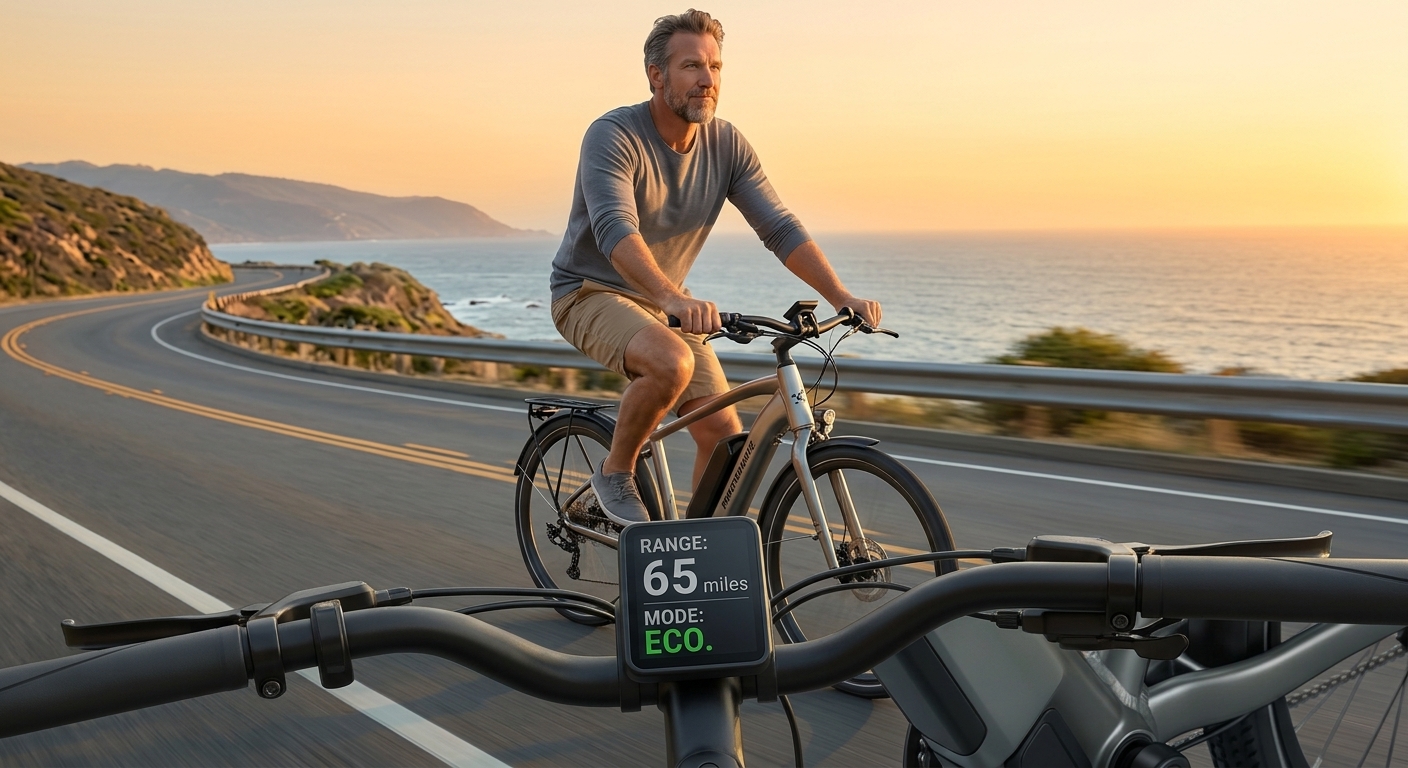
Quick Answer: How to get more range on an electric bike: ride in a lower pedal-assist level, keep tires properly inflated, pedal actively instead of relying on throttle, avoid extreme cold, and care for your battery with partial charges and proper storage. Combined, these habits can add 20–40% more distance to a single charge.
If you’ve ever watched your battery indicator drop faster than expected, you’re not alone. Range anxiety is one of the top frustrations e-bike owners report, and it usually comes down to a handful of fixable habits rather than a faulty battery. This guide breaks down exactly how to get more range on an electric bike, from understanding watt-hours to fine-tuning your riding technique, maintenance routine, and battery care. By the end, you’ll know precisely where your miles are going and how to get them back.
Key Takeaways
- Range depends on battery capacity (Wh), assist level, rider weight, terrain, and weather — not just battery size.
- Riding in eco mode and pedaling actively can nearly double your range compared to throttle-only riding in turbo mode.
- Proper tire pressure, brake adjustment, and chain lubrication prevent silent drag that eats into distance.
- Battery health declines faster with deep discharges, extreme heat/cold, and poor storage habits.
- Riders who need serious distance should consider a 750Wh+ battery, dual-battery setup, or range extender.
E-Bike Watt Hours Explained: Understanding Battery Capacity
Before you can optimize range, you need to understand what’s actually powering your ride. E-bike batteries are rated in watt-hours (Wh), which tells you the total energy stored — not just the voltage or amp-hours alone.
The formula is simple:
Watt-hours (Wh) = Volts (V) × Amp-hours (Ah)
Worked example: A typical e-bike battery rated at 48V and 14Ah has a capacity of:
48 × 14 = 672 Wh
To estimate theoretical range, divide battery capacity by your bike’s average energy consumption per mile (commonly 15–30 Wh/mile depending on assist level and terrain):
Range (miles) = Battery Capacity (Wh) ÷ Energy Use (Wh/mile)
Using our 672Wh example at a moderate 20 Wh/mile consumption rate:
672 ÷ 20 = 33.6 miles
This is a theoretical maximum. Real-world range is almost always lower than manufacturer claims, which are typically tested on flat ground, in eco mode, with a lightweight rider and minimal pedal assist demand. [ADD REAL EXPERIENCE: insert a first-hand range test comparing claimed vs. actual mileage on a specific e-bike model.]
Battery health also matters. Every lithium-ion battery has a Battery Management System (BMS) that regulates charging, discharging, and temperature to protect the cells. As batteries age, their usable capacity shrinks — a battery rated for 500 charge cycles may only hold 80% of its original capacity by the end of that cycle count.
| Battery Capacity | Typical Claimed Range | Realistic Range (Mixed Terrain, Mixed Assist) |
|---|---|---|
| 400 Wh | 25–35 miles | 15–22 miles |
| 500 Wh | 30–45 miles | 20–30 miles |
| 750 Wh | 45–65 miles | 30–45 miles |
| 1000+ Wh | 60–100 miles | 40–65 miles |
What Affects E-Bike Range the Most?
Range isn’t just about the battery — it’s about how much energy your system has to produce to move you forward. A few factors dominate:
Assist level and throttle use. Higher assist levels and throttle-only riding draw significantly more power per mile than pedaling with low assist. Throttle use alone can cut range by 30–50% compared to pedal-assisted eco mode.
Rider and system weight. Heavier riders, cargo, and accessories all increase the energy required to maintain speed, especially on hills.
Terrain and elevation. Climbing is the single biggest range killer. A hilly route can consume two to three times more energy per mile than flat ground.
Headwind. Wind resistance increases exponentially with speed, so riding into a strong headwind at high speed burns through battery fast.
Cold weather. Lithium-ion batteries lose efficiency in low temperatures. Expect 10–20% less range when riding in sub-40°F (4°C) conditions compared to mild weather.
How to Get More Range on an Electric Bike: Riding Habits and Technique
Your riding style has more influence over range than almost any other factor. These e-bike battery range tips are the fastest way to see a real difference on your next ride.
Choose eco over turbo. Lower assist levels ask the motor to contribute less, meaning your legs do more of the work and the battery lasts longer. Save turbo mode for steep climbs or when you genuinely need the power.
Avoid constant throttle use. Twisting the throttle from a stop draws a surge of current, especially at low speed — this is called voltage sag, and it’s inefficient. Pedal off the line instead, and let the motor assist rather than lead.
Maintain a steady cadence. Pedaling at a consistent, moderate cadence (roughly 70–90 RPM) keeps the motor operating in its efficient power band instead of constantly ramping up and down.
Hold a steady speed. Frequent acceleration and braking waste energy. Smooth, consistent riding uses less power than stop-and-go patterns.
Use your gears. Shifting down before a climb keeps your cadence efficient and reduces the load the motor has to compensate for, which is especially important on mid-drive systems.
Bike Maintenance and Setup to Maximize Electric Bike Distance
A poorly maintained bike fights itself for energy. These simple maintenance checks are essential if your goal is to maximize electric bike distance over time.
Check tire pressure regularly. Underinflated tires increase rolling resistance dramatically. Keep tires inflated to the manufacturer’s recommended PSI — typically printed on the sidewall.
Inspect for brake rub. A brake pad that lightly drags on the rotor or rim creates constant resistance that’s easy to miss but steadily drains the battery.
Keep the chain lubricated. A dry, dirty chain increases drivetrain friction, forcing the motor to work harder for the same output.
Reduce unnecessary drag and weight. Remove accessories you don’t need for a given ride, and make sure racks, fenders, or baskets aren’t rubbing against tires.
Battery Care and Hardware
How you charge, store, and handle your battery affects both daily range and long-term battery health.
Charging habits. Avoid letting the battery sit at 0% or 100% for extended periods. Many manufacturers recommend keeping charge between 20% and 80% for daily use to extend overall battery lifespan and charge cycle count.
Storage temperature. Store your battery in a cool, dry place — ideally between 50–68°F (10–20°C). Extreme heat accelerates capacity loss, while extreme cold temporarily reduces available power.
Preventing quick drain. Fully charge before long rides, avoid deep discharges below 10%, and disconnect accessories (like lights left on) that silently drain the battery when parked.
Signs you need a replacement. Noticeably shorter range despite normal riding habits, a battery that won’t hold a full charge, or visible swelling are all signs it’s time to replace the pack.
Safety note: Never puncture, disassemble, or expose a lithium-ion e-bike battery to extreme heat. Damaged batteries can overheat or catch fire. Always use the charger supplied by your manufacturer and charge on a non-flammable surface. If you suspect battery damage, stop use and contact a certified e-bike technician.
Technical Upgrades to Improve Range
If you’ve optimized habits and maintenance and still need more distance, hardware upgrades can help.
Dual-battery setups let you carry a second battery and swap or run both in tandem, effectively doubling capacity on long rides.
Range extenders are secondary battery packs that mount to the frame and supplement your primary battery without replacing it.
High-capacity battery upgrades swap your existing pack for one with more Wh, assuming your controller and frame support it.
Controller settings. Some e-bikes allow adjustment of power delivery curves through an app or display, letting you prioritize efficiency over acceleration.
Regenerative braking, found on some hub-motor e-bikes, recaptures a small amount of energy during braking and downhill coasting. The range gain is modest — typically 5–10% — but it adds up on hilly routes.
External Factors and Best Practices
Even with perfect habits, some range loss is outside your control. Planning around it is the next best thing.
Cold weather riding. Keep batteries insulated when possible and bring them indoors to warm up before a ride in freezing temperatures.
Headwind and elevation. Check wind forecasts and elevation profiles before long rides, and plan assist levels accordingly — save battery for climbs and headwind sections.
Long-trip planning. For rides approaching your estimated max range, carry a backup plan: know charging station locations, carry a spare battery if possible, and build in margin rather than cutting it close.
Buy an E-Bike with a High-Capacity Battery
If your current setup simply can’t meet your distance needs even with optimization, it may be time to consider a bike built for range.
- 500 Wh batteries suit commuters and casual riders covering 15–30 miles per trip.
- 750 Wh batteries are a strong middle ground for mixed-terrain riders wanting 30–45 miles of real-world range.
- 1000 Wh+ batteries, often paired with dual-battery or mid-drive systems, suit long-distance and adventure riders.
| E-Bike Class | Top Assisted Speed | Typical Use Case |
|---|---|---|
| Class 1 | 20 mph (pedal-assist only) | Trails, commuting, multi-use paths |
| Class 2 | 20 mph (throttle-assisted) | Commuting, casual riding |
| Class 3 | 28 mph (pedal-assist only) | Road riding, faster commuting |
Mid-drive motors generally deliver better range and hill-climbing efficiency than hub motors because they leverage the bike’s gearing, while hub motors tend to be simpler and lower-maintenance. Features that help maximize range include regenerative braking, efficient mid-drive systems, companion apps with power-curve customization, and swappable or dual-battery compatibility.
10-Point Range Checklist
- Ride in eco or low assist mode when possible
- Minimize throttle-only use
- Maintain steady cadence and speed
- Check and correct tire pressure before rides
- Inspect for brake rub
- Keep the chain clean and lubricated
- Remove unnecessary weight and accessories
- Charge between 20–80% for daily use
- Store the battery at moderate temperature
- Plan routes around elevation and wind
Frequently Asked Questions
How can I increase the range of my electric bike?
Ride in a lower assist level, pedal actively instead of relying on throttle, keep tires properly inflated, and maintain a steady cadence. Combined with good battery charging habits, these changes can add 20–40% more distance per charge.
How long does it take to go 20 miles on an electric bike?
At an average e-bike speed of 12–18 mph, 20 miles typically takes 70–100 minutes. Actual time depends on assist level, terrain, stops, and rider effort.
Can e-bikes go 50 miles per hour?
Most consumer e-bikes are electronically limited to 20–28 mph depending on class. Specialized high-performance or modified e-bikes can exceed this, but doing so may violate local e-bike regulations and voids many warranties.
What e-bike has a 200 mile range?
No standard consumer e-bike achieves 200 miles on a single charge under normal riding conditions. Claims near this figure typically involve minimal assist, flat terrain, and lightweight riders; realistic long-range setups with dual batteries reach roughly 80–100 miles. [VERIFY: current market-leading long-range e-bike model and specs before publishing.]
Ride Farther, Starting Today
Getting more range from your e-bike comes down to three habits that matter most: choosing a lower assist level, keeping your tires properly inflated, and taking care of your battery’s charge cycles and storage. Start with these three changes on your next ride, and layer in the maintenance and technique tips above over time.
Ready to put these tips into practice? Browse [BRAND NAME]’s range of high-capacity e-bikes or book a tune-up with our service team to get your current ride performing at its best. [ADD REAL EXPERIENCE: link to relevant bikes or service page once confirmed.]